Dedicated Hands: Serving God in Every Action
Posted on December 9, 2025 Leave a Comment
“Whatever your hand finds to do, do it with all your might.” — Ecclesiastes 9:10
Our hands are powerful tools given by God. With them we build, serve, comfort, and worship. Think of Jesus—His hands touched the sick, broke bread to feed thousands, and were pierced for our salvation. The Bible reminds us that what we do with our hands matters, because they are extensions of our hearts.
Hands can be used to tear down or to lift up. They can be clenched in anger or opened in generosity. God calls us to dedicate the work of our hands to Him, so that even ordinary tasks—washing dishes, typing emails, holding a child—become acts of worship when done in love.
- Examine your daily actions: Are your hands serving self or serving others?
- Choose intentionality: Offer your hands to God each morning, asking Him to guide your work.
- Practice kindness: Use your hands to encourage—through a handshake, a hug, or a helping hand.
- Remember eternity: The work of our hands, when surrendered to God, has lasting impact beyond this life.
Prayer
Lord, thank You for the gift of my hands. May they be instruments of Your love and service. Establish the work of my hands so that everything I do brings glory to You. Teach me to use them not for selfish gain, but to bless others and reflect Christ. In Jesus’ name, AMEN!
If you like what you see, please share it!

Faithful Finances
Posted on December 8, 2025 Leave a Comment

“Honor the Lord with your wealth, with the firstfruits of all your crops; then your barns will be filled to overflowing, and your vats will brim over with new wine.” — Proverbs 3:9–10 (NIV)
Money is often seen as a measure of success, security, or even identity. Yet Scripture reminds us that finances are not just about numbers—they are about worship. When we honor God with our resources, we acknowledge that everything we have comes from Him. True financial stewardship is not about how much we possess but how faithfully we use it. God’s encouragement is that when we put Him first, He provides—not always in material abundance, but in peace, contentment, and sufficiency.
Application
- Practice gratitude: thank God daily for the resources He has entrusted to you.
- Prioritize generosity: give to others, whether through tithes, offerings, or acts of kindness.
- Seek wisdom: invite God into your financial decisions, asking Him to guide your spending, saving, and giving.
- Remember: financial faithfulness is less about wealth accumulation and more about aligning your heart with God’s purposes.
Prayer
Lord, thank You for providing all that I need. Teach me to honor You with my finances, to give generously, and to trust You with my future. Free me from anxiety about money and help me to see resources as tools for Your kingdom. May my financial choices reflect faith, gratitude, and obedience. In Jesus’ name, AMEN!
If you like what you see, please share it!

Encourage My Work
Posted on December 5, 2025 Leave a Comment
“May the favor of the Lord our God rest on us; establish the work of our hands for us—yes, establish the work of our hands.” — Psalm 90:17 (NIV)
Work can often feel routine, exhausting, or unnoticed. Yet Scripture reminds us that our labor is not just about productivity—it’s about purpose. When we invite God to encourage and establish our work, we shift from striving in our own strength to resting in His favor. Encouragement from the Lord is not simply a pat on the back; it’s His assurance that what we do in faith has eternal significance. Even the smallest tasks, when offered to Him, become part of His greater story.
- Begin each day by asking God to bless and establish your work.
- Look for ways to encourage others in their work—your words may be the reminder they need that God sees them.
- Reframe your perspective: instead of asking, “Is this important?” ask, “Am I doing this with God’s favor?” That shift brings meaning to even the most ordinary tasks.
Prayer
Lord, thank You for the gift of work and the opportunities it brings to serve You and others. Encourage my work today—fill it with Your favor, establish it with Your strength, and use it for Your glory. Help me to encourage those around me, reminding them that their labor matters to You. May my hands be faithful, my heart be steadfast, and my spirit be joyful in all I do. In Jesus’ name, AMEN!
If you like what you see, please share it!

The Spiritual Importance of a Roof Over One’s Head
Posted on December 4, 2025 Leave a Comment
One summer, a storm came with large hail and caused damage to my roof. I happened to be new to the area where I live, in north central Texas. While searching for a roofing company to evaluate the damage to my roof, I was surprised. I found a roofing company with my last name “Lankford.” There is no relation, by the way. It was called, you guessed it, “Lankford Roofing Company” in my city.
I contacted them and they were quick to respond and gave me a reasonable estimate. I am now the owner of a new shingled roof and very happy. You might even want to give them a call for your roofing needs.
When we think of a roof over our head, our minds often go to the basics of shelter—protection from rain, heat, and cold. It’s one of life’s essentials, a symbol of stability and security. Yet beyond its physical necessity, the image of a roof carries profound spiritual meaning. Scripture often uses the language of dwelling, covering, and refuge to remind us that God Himself is our ultimate shelter.
A roof represents safety. Without it, we are exposed to the elements, vulnerable to storms and dangers. Spiritually, this mirrors our need for God’s covering. Psalm 91:1 declares, “Whoever dwells in the shelter of the Most High will rest in the shadow of the Almighty.” Just as a roof shields us from rain, God’s presence shields us from fear, despair, and the assaults of the enemy.
Having a roof over one’s head is more than a physical blessing—it is a reminder of God’s provision. Every time we walk into our homes, we are stepping under a symbol of His care. It is easy to take shelter for granted, but when we pause to reflect, we see that it points us to the deeper truth: God provides not only material needs but also spiritual refuge.
What are the Spiritual lessons we learn here?
- Protection: A roof keeps out what could harm us. Spiritually, God’s Word and His Spirit guard our hearts and minds.
- Belonging: A roof signifies a place to call home. In Christ, we are no longer wanderers but members of God’s household (Ephesians 2:19).
- Rest: Shelter allows us to sleep in peace. Spiritually, God invites us to rest in Him, laying down our burdens.
- Gratitude: Every roof reminds us of blessings we didn’t earn but were given. Gratitude turns our shelter into a sanctuary.
Think about your own roof—the literal one over your head. How often do you thank God for it? Each time you hear rain tapping against it or feel warmth inside while the wind howls outside, let it remind you of His faithfulness.
But also consider: are you living under His spiritual roof? Many people have houses yet feel spiritually homeless—adrift, anxious, unprotected. The invitation of Christ is to come under His covering, to abide in Him. Just as we wouldn’t sleep outside in a storm when a roof is available, why would we face life’s trials without the shelter of God’s presence?
I thank God for not only a roof over my head but, thank you “Lankford Roofing Co.” for a superior job.
If you like what you see, please share it!

Understanding the Dangers of Idolatry
Posted on November 6, 2025 Leave a Comment
In a world filled with tangible symbols and visual representations, the temptation to worship idols—whether physical statues or metaphorical substitutes—is as real today as it was in ancient times. Yet Scripture is clear: “You shall not make for yourself a carved image . . . you shall not bow down to them nor serve them For I, the Lord your God, am a jealous God.” (Exodus 20:4–5).
But why does God take idol worship so seriously?
First, idols distort the nature of God. The Creator of the universe is infinite, invisible, and holy. No carved image or crafted object can capture His majesty. When we reduce God to something we can see or touch, we trade truth for a lie (Romans 1:22–23).
Second, idols distract our hearts. Whether it’s a statue, a bank account, a relationship, or even our own success, anything we elevate above God becomes a false god. Idolatry isn’t just about golden calves—it’s about misplaced trust. God alone deserves our ultimate allegiance.
Third, idols diminish our freedom. What we worship shapes us. Psalm 115 says those who make idols become like them—lifeless and powerless. In contrast, worshiping the living God brings transformation, purpose, and life.
Finally, idol worship grieves God’s heart. He is not distant or indifferent. He is a jealous God—not in insecurity, but in love. Like a faithful spouse, He longs for our undivided devotion.
In a culture that constantly offers substitutes for God, we must examine our hearts. What do we run to for comfort, identity, or security? Let’s turn from lifeless idols and fix our eyes on the living Christ, who alone satisfies the soul.
1 John 5:21 says—“Little children, keep yourselves from idols. AMEN!”
If you like what you see, please share it!

Beyond the Costumes: A Meaningful Alternative to Halloween!
Posted on October 17, 2025 Leave a Comment

As October rolled in, neighborhoods began to glow with jack-o’-lanterns, spooky decorations, and the buzz of costume planning. For many, Halloween is a time of fun and festivity. But for others—whether due to personal convictions, spiritual beliefs, or a desire for more wholesome celebrations—Halloween doesn’t quite resonate. Thankfully, there are rich, creative, and meaningful alternatives that offer connection, joy, and purpose without the eerie overtones.
🎃 Fall Festivals: Celebrating the Season’s Beauty
Many churches and communities host fall festivals as a family-friendly alternative to Halloween. These events often include games, hayrides, pumpkin decorating, and delicious seasonal treats. The focus shifts from fear to fun, from darkness to light. It’s a wonderful way to gather with others, celebrate the harvest, and enjoy the beauty of autumn.
Our church, Parkside Baptist Church, Denison, TX offers its annual Pumpkins at the Park. The event offers Games, Hayrides, Candy, Food, Bounce Houses and Prizes. This year, the event will be held on Saturday October 25th from 4 to 6 PM in the park, at the church located at 301 North Lillis Ln. in Denison, TX.
Fall reminds us of God’s provision and the rhythms of creation. A festival that honors these gifts can be a powerful way to cultivate gratitude and joy.
🕯️ Light Parties: Shining in the Darkness
Some families and churches host “Light Parties” as a direct contrast to Halloween’s darker themes. These gatherings celebrate the light of Christ through music, crafts, food, and Scripture. Children might dress as biblical characters or heroes of faith, reinforcing positive role models and spiritual truths.
Hosting a Light Party can be a creative way to teach children about being “the light of the world” (Matthew 5:14) while offering a safe and uplifting environment.
📖 Heroes of Faith Night
Instead of dressing up as ghosts or goblins, why not celebrate the lives of those who’ve walked faithfully with God? A “Heroes of Faith” night can include storytelling, costumes, and activities centered around figures like Esther, David, Ruth, or modern missionaries. It’s a chance to inspire courage, obedience, and trust in God.
You might offer this prayer: “Lord, help us to walk in the footsteps of those who trusted You deeply. May their stories ignite faith in our hearts.”
🍂 Acts of Kindness Day
What if October 31 became a day of intentional kindness? Families could bake treats for neighbors, visit nursing homes, or write encouraging notes to friends. Turning the day into a mission of love transforms it from a celebration of fear into a movement of hope.
In a world often captivated by darkness, kindness is a radical act of light. “Do not be overcome by evil, but overcome evil with good” (Romans 12:21).
🏡 Cozy Family Night
Sometimes the best alternative is simply staying in. A cozy night with warm cider, a good book, or a family movie can be just as memorable. Use the evening to reflect, pray, or share stories of God’s faithfulness. It’s a gentle way to reclaim the night with peace and purpose.
Create a tradition that centers on rest, reflection, and togetherness. Let your home be a sanctuary of grace.
Whether you choose to host a Light Party, serve your neighbors, or simply enjoy a quiet evening at home, the heart behind these alternatives is the same: to celebrate goodness, truth, and beauty in a season that often glorifies fear. You don’t have to participate in Halloween to enjoy October. There are countless ways to honor the season—and the Savior—through creativity, community, and compassion.
“The LORD bless you and keep you; the LORD make His face shine upon you and be gracious to you; the LORD lift up His countenance upon you, and give you peace.” (Numbers 6:24 – 26)
If you like what you see, please share it!

Guarding The Heart
Posted on October 16, 2025 Leave a Comment
“Beware, brethren, lest there be in any of you an evil heart of unbelief in departing from the living God.” Hebrews 3:12
The writer of Hebrews offers a sobering warning: even those who have witnessed God’s power and provision can drift into unbelief. This verse echoes the tragic story of Israel in the wilderness—rescued from Egypt, yet hardened by doubt. It’s not just about rebellion in the obvious sense; it’s about the slow erosion of trust, the subtle shift from dependence to self-reliance, from awe to apathy.
Unbelief doesn’t always shout. Sometimes it whispers: “God won’t come through this time,” or “Maybe I need to take control.” It creeps in through disappointment, unanswered prayers, or prolonged waiting. Left unchecked, it calcifies the heart, making it resistant to God’s voice and presence.
This is both a warning and an invitation. It calls us to vigilance—not paranoia, but spiritual attentiveness. The phrase “Beware” implies responsibility, not just for ourselves but for one another. Faith is not a solo journey. We need community to help us stay soft-hearted and anchored in truth.
By using the term “brothers” the author did not guarantee that any or all of his readers were true believers. You see, each of them had to show his or her conversion by refusing to deny the faith they had professed. So, in this strong warning, he observed that his readers were carelessly considering deserting Christ. If they actually turned from him, they would simply show that they were never Christians. He did not want his readers to be deceived by their own actions.
Two potential problems were then pinpointed among them. First, some were in danger of harboring a sinful, unbelieving heart. Second, they were in danger of turning away from the living God.
The main problem of these people was unbelief. They neglected to take seriously God’s commands and promises. This unbelief will often lead to apostasy.
So how can I guard against an unbelieving heart?
- Stay rooted in Scripture. God’s Word reminds us of His character and faithfulness, especially when our feelings falter
- Practice honest prayer. Bring your doubts, fears, and frustrations to God. He’s not threatened by your questions.
- Stay in community. Isolation breeds unbelief. Encouragement from fellow believers can reignite trust when your flame is flickering.
- Remember past faithfulness. Rehearse the ways God has shown up before. Testimonies are fuel for present faith.
This verse also reminds us that unbelief is not just intellectual—it’s relational. It’s not merely doubting facts about God; it’s turning away from the living God. Faith, then, is not just believing in God’s existence but clinging to His presence. It’s choosing to trust His heart even when His hand seems hidden.
If you like what you see, please share it!

Finding True Wisdom in God’s Word
Posted on September 19, 2025 Leave a Comment

In a world saturated with information, opinions, and self-proclaimed experts, the concept of wisdom often gets diluted. We confuse intelligence with insight, and cleverness with truth. But Scripture draws a clear line: true wisdom comes from God. It is not merely the accumulation of facts. It’s not just the ability to make savvy decisions. It’s a divine gift. This gift is rooted in reverence for the Lord and shaped by His character.
James 3:17 describes this wisdom as “pure, peace-loving, considerate, submissive, full of mercy and good fruit, impartial and sincere.” These aren’t traits we stumble into—they’re the fruit of abiding in God. His wisdom is not reactive or manipulative; it’s holy, healing, and whole. It doesn’t just help us make better choices—it transforms how we see, love, and live.
Solomon understood this. When given the chance to ask for anything, he chose wisdom. He did not choose it for personal gain. He wanted to lead well and honor God. And God was pleased. That moment reminds us: wisdom isn’t just useful—it’s sacred.
APPLICATION:
So how do we pursue God’s wisdom in everyday life?
- Start with reverence. Proverbs 1:7 says, “The fear of the Lord is the beginning of wisdom.” True wisdom begins when we acknowledge God’s authority and goodness.
- Ask boldly. James 1:5 promises that if we lack wisdom, we can ask God—and He will give generously. Wisdom isn’t earned; it’s received.
- Listen deeply. God’s wisdom often comes through Scripture, prayer, and the quiet nudges of the Holy Spirit. It requires stillness and surrender.
- Live it out. Wisdom isn’t abstract. It is clear in how we treat others. It shows up in how we respond to conflict. It is shown in how we steward our time and gifts.
God’s wisdom doesn’t always align with worldly logic. It leads us to forgive when revenge feels justified. We wait when urgency screams. We serve when self-preservation tempts. But it always leads to life.


If you like what you see, please share it!

I Want This
Posted on April 25, 2025 Leave a Comment
“But seek first the kingdom of God and His righteousness, and all these things shall be added to you.” Matthew 6:33
We have all been shopping and seen things that grab our attention and our mind thinks, “Oh I want this!” Then, our conscience steps in and asks you if you really need this?
How about the things in life that you want? As a child, we often say when we grow up, we want to be a doctor, or a lawyer, or a banker, or a farmer, or an engineer, or a teacher, etc. We all want things as we mature. I want a new car! I want a new house! I want a new job!
Now we do have needs in our lives, and God knows that: Jesus says “Your Father knows that you need all these things.” You DO have legitimate needs in this world, and it is not wrong to want to be provided for—and especially to care for your own family, which we are commanded by God elsewhere to do.
But knowing that we can really only focus on ONE primary thing; we can really only have ONE master, Jesus tells us in verses 31-32, “Therefore do not worry, saying, ‘What shall we eat?’ or ‘What shall we drink?’ or ‘What shall we wear?’ For after all these things the Gentiles seek. For your heavenly Father knows that you need all these things.” Jesus says these material worries are what most people focus on. And He doesn’t deny that you need some of those things, but because you can really only have ONE master of your life, He then utters these famous words: “Seek first His Kingdom, and His righteousness, and all these things will be added to you.” In other words, He is saying: Focus on the main thing, and I’ll make sure your needs are taken care of.
The first step to getting what you want in life is knowing what you want. Jesus said, in essence, ‘The key to getting what you want out of life is to focus on what I want for your life.’ Note the words ‘seek first’. This word ‘seek’ means ‘to strive for diligently’ or ‘to desire strongly’. The action is continuous. It says, ‘Keep on striving for, keep on seeking, keep on desiring daily.’ When Jesus says, ‘Seek first His Kingdom and His righteousness,’ it means you don’t have to pray about what your top priority in life ought to be; everything you do will be ordered by those two things. Where you work, how you spend your time, the person you marry, how you manage your money, the relationships you form, the pastimes you enjoy, the purchases you make—all of these will be sifted and sorted through one filter: ‘Is this for His kingdom? Does it relate to His righteousness?’
This verse’s meaning is as direct as it sounds. We are to seek the things of God as a priority over the things of the world. Primarily, it means we are to seek the salvation that is inherent in the kingdom of God because it is of greater value than all the world’s riches. Does this mean that we should neglect the reasonable and daily duties that help sustain our lives? Certainly not. But for the Christian, there should be a difference in attitude toward them. If we are taking care of God’s business as a priority—seeking His salvation, living in obedience to Him, and sharing the good news of the kingdom with others—then He will take care of our business as He promised—and if that’s the arrangement, where is worrying?
But how do we know if we’re truly seeking God’s kingdom first? There are questions we can ask ourselves. “Where do I primarily spend my energies? Is all my time and money spent on goods and activities that will certainly perish, or in the service of God—the results of which live on for eternity?” Believers who have learned to truly put God first may then rest in this holy dynamic: “…and all these things will be given to you as well.”
Can’t you see how living this way would transform your marriage, your work, your family, your finances, and every other area of your life? But in order to pursue the priorities of the Kingdom, you must first have a relationship with the King. You won’t even know where the Kingdom is, or what it looks like, until you know the King. And you can know Him. How? As you open the pages of His Word and open your heart, there He will reveal Himself to you. And as you spend time with Him in prayer, He will respond to you.
These “negative” aspects of the kingdom run counter to a heresy that is gaining ground around the world, the so-called “prosperity gospel.” A growing number of false teachers are gathering followers under the message “God wants you to be rich!” But that philosophy is not the counsel of the Bible—and it is certainly not the counsel of Matthew 6:33, which is not a formula for gaining wealth. It is a description of how God works. Jesus taught that our focus should be shifted away from this world—its status and its lying allurements—and placed upon the things of God’s kingdom.
God has promised to provide for His own, supplying every need (Philippians 4:19), but His idea of what we need is often different from ours, and His timing will only occasionally meet our expectations. For example, we may see our need as riches or advancement, but perhaps God knows that what truly we need is a time of poverty, loss or solitude. When this happens, we are in good company. God loved both Job and Elijah, but He allowed Satan to absolutely pound Job (all under His watchful eye), and He let that evil woman, Jezebel, break the spirit of His own prophet Elijah (Job 1–2; 1 Kings 18–19). In both cases, God followed these trials with restoration and sustenance.
Make God and His kingdom your priority, and then let HIM take care of your material concerns. That’s the context and the general meaning of this verse.
If you like what you see, please share it!

He Lives: The Story Behind the Beloved Easter Hymn
Posted on April 24, 2025 Leave a Comment
1Now when the Sabbath was past, Mary Magdalene, Mary the mother of James, and Salome bought spices, that they might come and anoint Him . . . 5And entering the tomb, they saw a young man clothed in a long white robe sitting on the right side; and they were alarmed. 6But he said to them, “Do not be alarmed. You seek Jesus of Nazareth, who was crucified. He is risen! He is not here. See the place where they laid Him.” Mark 16:1, 5-6 NKJV
It is not uncommon that on Easter Sunday, we sing the hymn “He Lives.” But then that’s what we celebrate on Easter Sunday anyway.
Can you imagine what the disciples and followers of Jesus must have said as word spread that he was not in the tomb? The words, “He lives” seem to be one option that is plausible.
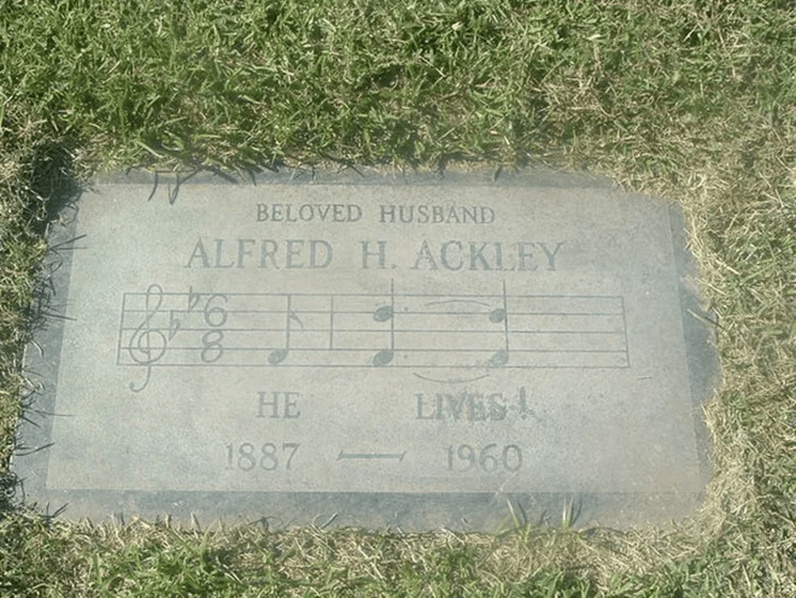
The hymn was composed in 1933 by Alfred Henry Ackley.
Alfred Ackley was born on January 21, 1887. His father was a Methodist Minister who provided a strong foundation for him in music. He played at least the piano and cello.
He Lives is also often referred to as “I Serve a Risen Savior”, the first line of the hymn. He described how he served a risen Savior. No matter what others might say, Ackley knew that He was living. Why? Because He lived within his heart.
He could see the impact all around. He could see God’s hand of mercy and hear His voice of cheer. He knew Jesus was always near. In fact, so intimate was their relationship that Ackley could walk and talk with Him wherever he went. He is available to save all who call on Him.
We can see His care all around. We might grow weary, but we never need to despair, for Jesus always is with us. And one day He will return, providing us with an eternal home.
In Forty Gospel Hymns stories, we are told “In the 1930’s, there was preacher named Alfred Ackley. During a time of evangelistic meetings he was holding, a young Jewish student asked the question, “Why should I worship a dead Jew?” Using the Scriptures to witness to him, Pastor Ackley began to explain to this young man how that Jesus was alive. “He Lives! I tell you; He is not dead, but lives here and now! Jesus Christ is more alive today than ever before. I can prove it by my own experience, as well as the testimony of countless thousands.”
Ackley preached with great fervency both that morning and evening on the realization of our Lord’s resurrection. But later that night, he still could not shake the question of that young Jewish student. It was then that his wife encouraged him to do something about it.”
He turned to the passage in Mark that described Christ’s resurrection. The words “He Lives” in the passage stuck out to Ackley. He then began to write, as the words flowed from him. In moments, he was at the piano adding music to the words he’d been inspired to write.
This hymn is also known by its first line, “I Serve a Risen Savior.”
“I serve a risen Savior, He’s in the world today;
I know that He is living, whatever men may say;
I see His hand of mercy; I hear His voice of cheer,
And just the time I need Him, He’s always near.”
After completing his musical training, Ackley returned to the states to attend Westminster Theological Seminary in Maryland and was ordained as a Presbyterian minister in 1914.
Ackley pastored in Wilkes-Barre and Elmhurst, Pennsylvania, before being called to a congregation in Escondido, California. For a few years he worked with evangelist Billy Sunday.
He was awarded an honorary Doctor of Sacred Music degree by John Brown University in Arkansas in appreciation for all his musical pursuits.
One doesn’t have to have a degree in Sacred Music or even a degree from a university to know that Jesus lives today. Jesus never said you need to be educated to know him. It is my prayer that you know him today. If you don’t know him, you can by simply asking him to come into your heart and save you. The exciting thing is—he will!
Yes, He is alive today and with you!


 Bob Lankford